

5C Wealth Review and Outlook — November 2026
One of the reasons the game show Jeopardy! is so popular is its unique format, which requires contestants to respond to clues in the form of a question. Having to answer in the form of a question requires people to think differently about what constitutes a correct response. Under the category “Difficult Ongoing Global Issues,” we thought five appropriate responses for investors today might be:
- What is Artificial Intelligence (“AI”)?
- What are regional conflicts?
- What are tariffs?
- What is inflation?
- What are supply chain disruptions?
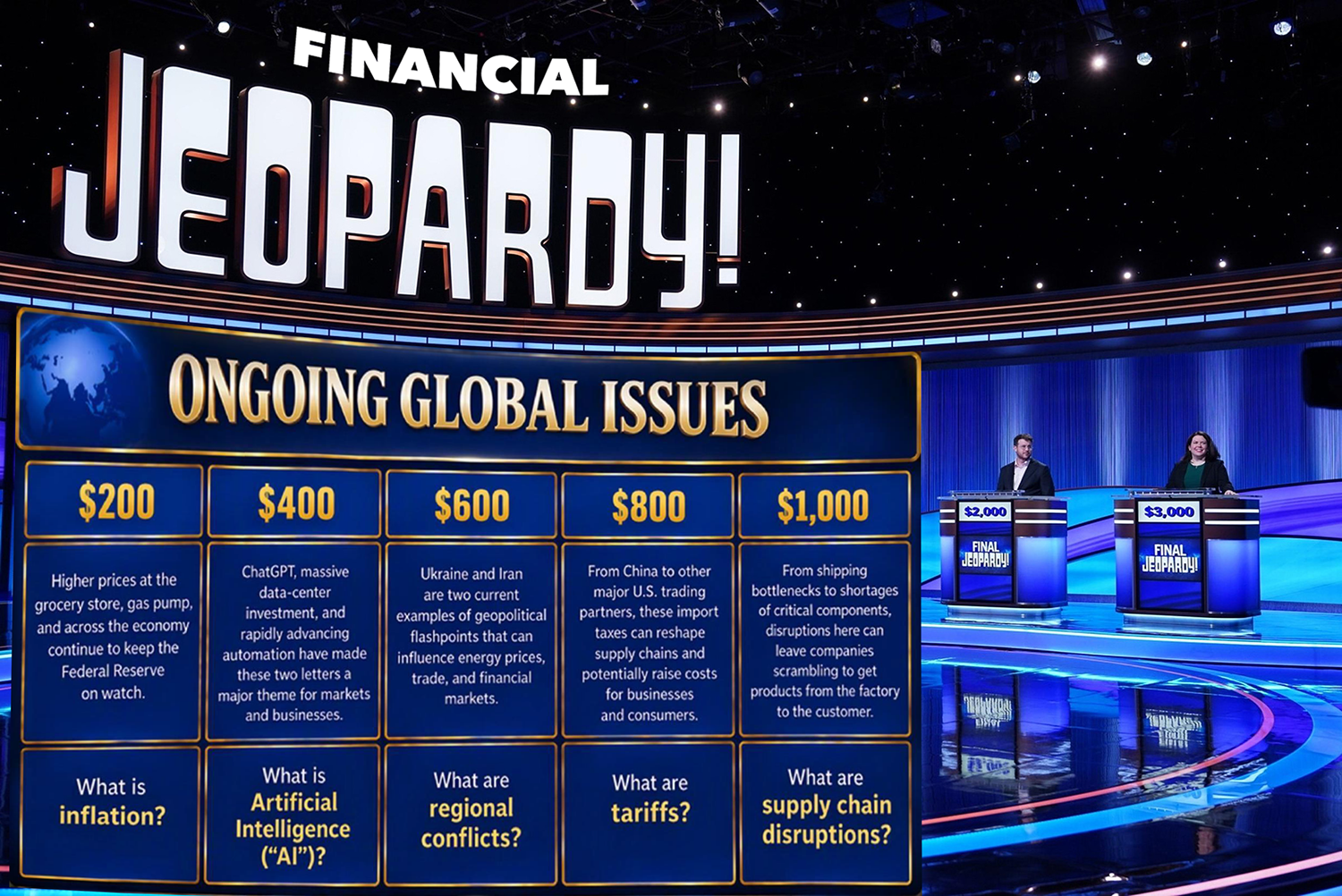
We would offer the appropriate question to that: “What are 5 things that get ominous headlines which financial markets have largely taken in stride?”
Global markets have taken these concerns and other risks in stride posting very solid results in 2026. The table below details various asset-class investment returns over the last quarter, year to date and trailing 3-year returns. Only in the last 3 months have we experienced weakening results with a strong 3 year return amongst almost all asset classes.
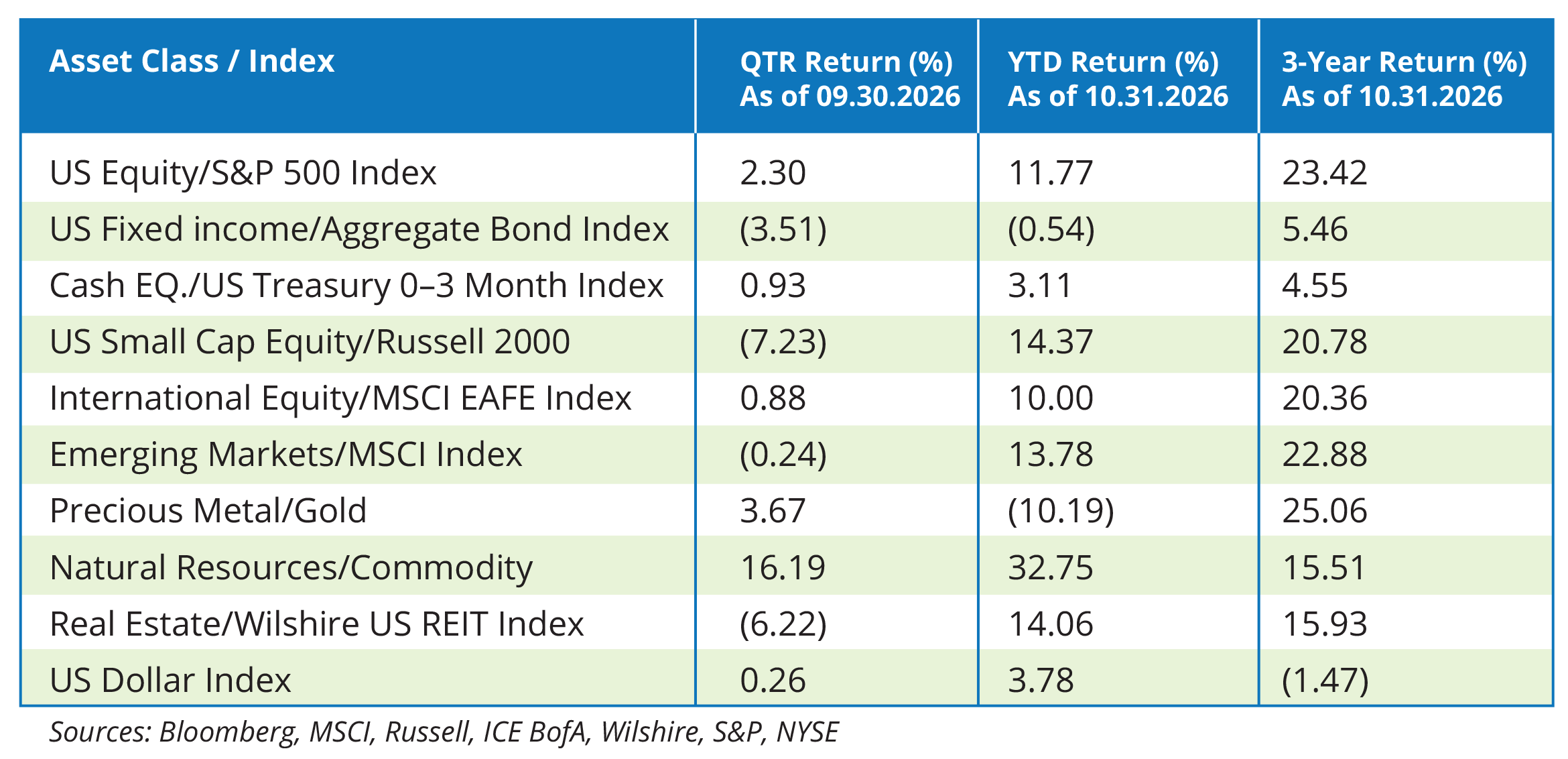
The most sensitive asset classes to interest rate increases showed the weakest quarterly results with small caps, real estate, and bonds declining in the latest quarter.
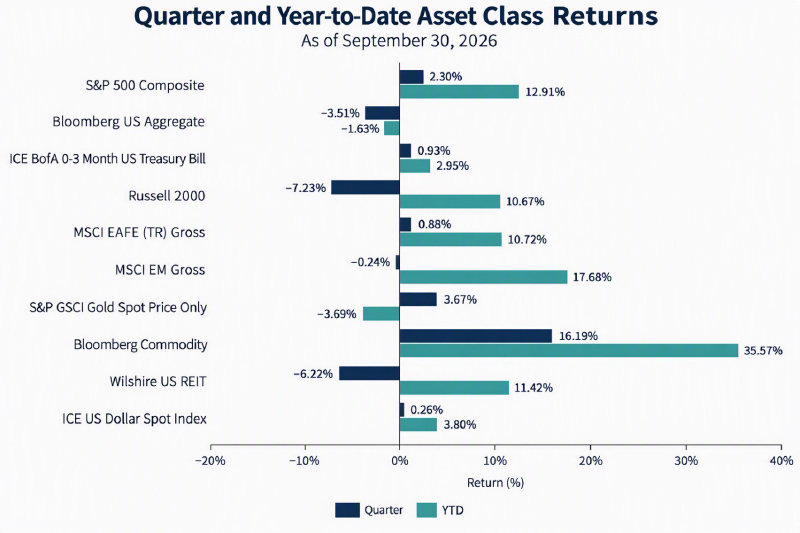
Sources: Bloomberg, MSCI, Russell, ICE BofA, Wilshire, S&P, NYSE
The semiconductor Index (SOX) led by the AI push increased more than 70% year-to-date, while software stocks, as measured by the relevant software index, have gained only about 5%. This wide dispersion underscores the importance of understanding the underlying drivers of market performance rather than relying only on broad index results.
AI has been a major driver of this divergence. Companies effectively leveragaging AI have been rewarded, while those facing competitive disruption have generally lagged. This trend has created clear winners and losers across sectors and has contributed to meaningful differences in performance even within closely related competitors.
Recent performance reflects a transition from enthusiasm over AI capacity creation toward greater scrutiny of capital intensity, monetization and credit quality. The long-term AI opportunity remains significant, but investors are becoming more selective about who finances the buildout and who ultimately earns an adequate return on that investment.
AI infrastructure risks are highlighted by Hyperscaler capital spending which is projected to rise from $806 billion in 2026 to $1.104 trillion in 2027 and $1.281 trillion in 2028. The investment case increasingly depends on AI revenue, utilization and productivity benefits developing fast enough to earn an adequate return on that expanding capital base.
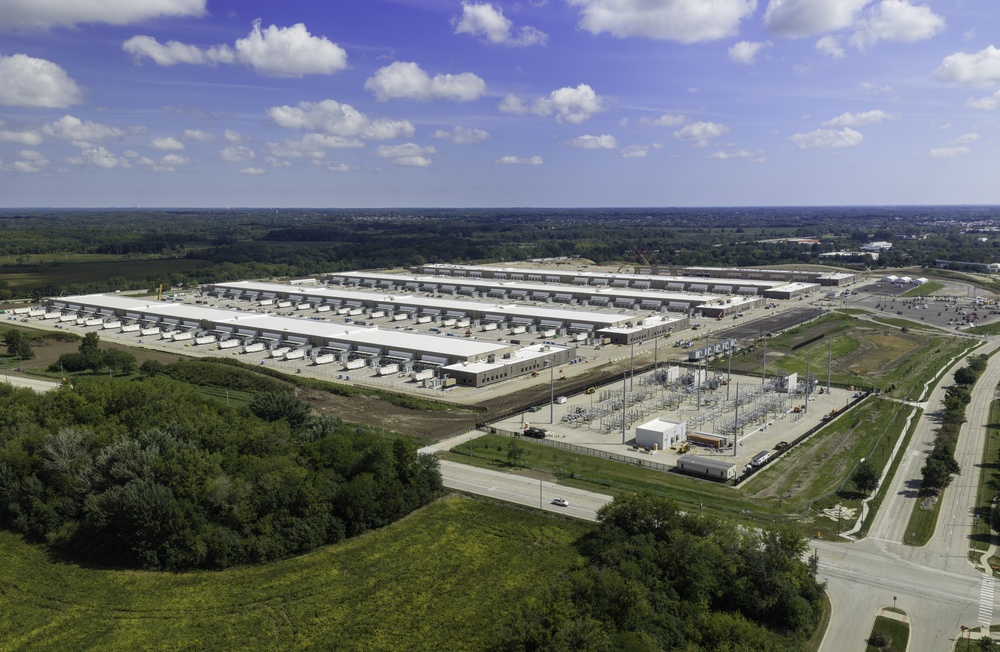
Credit and refinancing risk: Debt-financed data centers and specialized AI-cloud providers are especially exposed if customer demand, utilization rates or pricing fall below projections. High customer concentration, rapidly depreciating equipment and refinancing needs can amplify the downside when anticipated cash flows are delayed. We believe that maintaining a well-diversified portfolio will help mitigate concentrated technology market risks.

The term “Emerging Markets” may seem somewhat outdated given that several EM economies now rival developed nations in size and economic influence. Nevertheless, the classification remains widely used by investors. Within emerging markets, country and sector concentration can have a significant impact on results, particularly when a small number of markets or industries dominate index performance.

A performance gap of roughly 15 percentage points between the two EM passive funds above, within the same asset class highlights just how significant country and sector concentration risks can become over time. This is a reminder that index investing still requires thoughtful portfolio construction and an understanding of what exposures are actually being owned.
As investors reassessed the software sector, many companies have demonstrated durable competitive advantages, substantial recurring revenue streams, large installed customer bases, and strong innovation pipelines. We intend to maintain exposure to quality companies in this sector that we believe are more likely to benefit from AI adoption than be disrupted by it.
Often referred to as the “picks and shovels” suppliers of the AI ecosystem, companies that provide critical infrastructure, networking, energy, construction, and materials have experienced strong demand growth. These businesses may not always be viewed as technology companies, but they play an important role in supporting the continued expansion of AI-related investment.
Interest Rate & Inflation
Reasonable observers may disagree on an appropriate level for short-term interest rates. However, markets generally care less about the precise rate level than they do about the direction and stability of policy. A clearer path for monetary policy can help reduce uncertainty, even if rates remain higher than investors would prefer. The Federal Reserve remains in a cautious, data-dependent position. Inflation is still above the Fed’s 2% objective, with the latest Consumer Price Index (CPI) and Producer Price Index (PPI) posting hotter numbers for the September reading. CPI at 3.7% & PPI at 6.3% for the trailing one year ending September 30, 2026. Federal Reserve Governor Christopher Waller recently summarized this balanced view, suggesting that if upcoming inflation data continue to improve, he would support holding rates steady. However, if inflation reaccelerates, an additional rate increase could still be appropriate. This underscores the fact that markets are likely to remain sensitive not only to the level of interest rates, but also to the direction of incoming inflation data and the Fed’s interpretation of those trends. The connection between Geopolitical impacts and inflation is key. Commodity prices are reflected by inflation and therefore have pressured the global economy by increasing costs from fueling cars to a basket of food commodities measured by the FAO Global food price index which increased by 5.8% over the same annual period. The Fed’s most recent policy adjustment kept unchanged the federal funds rate to a range of 3.75%-4%, which was widely expected.
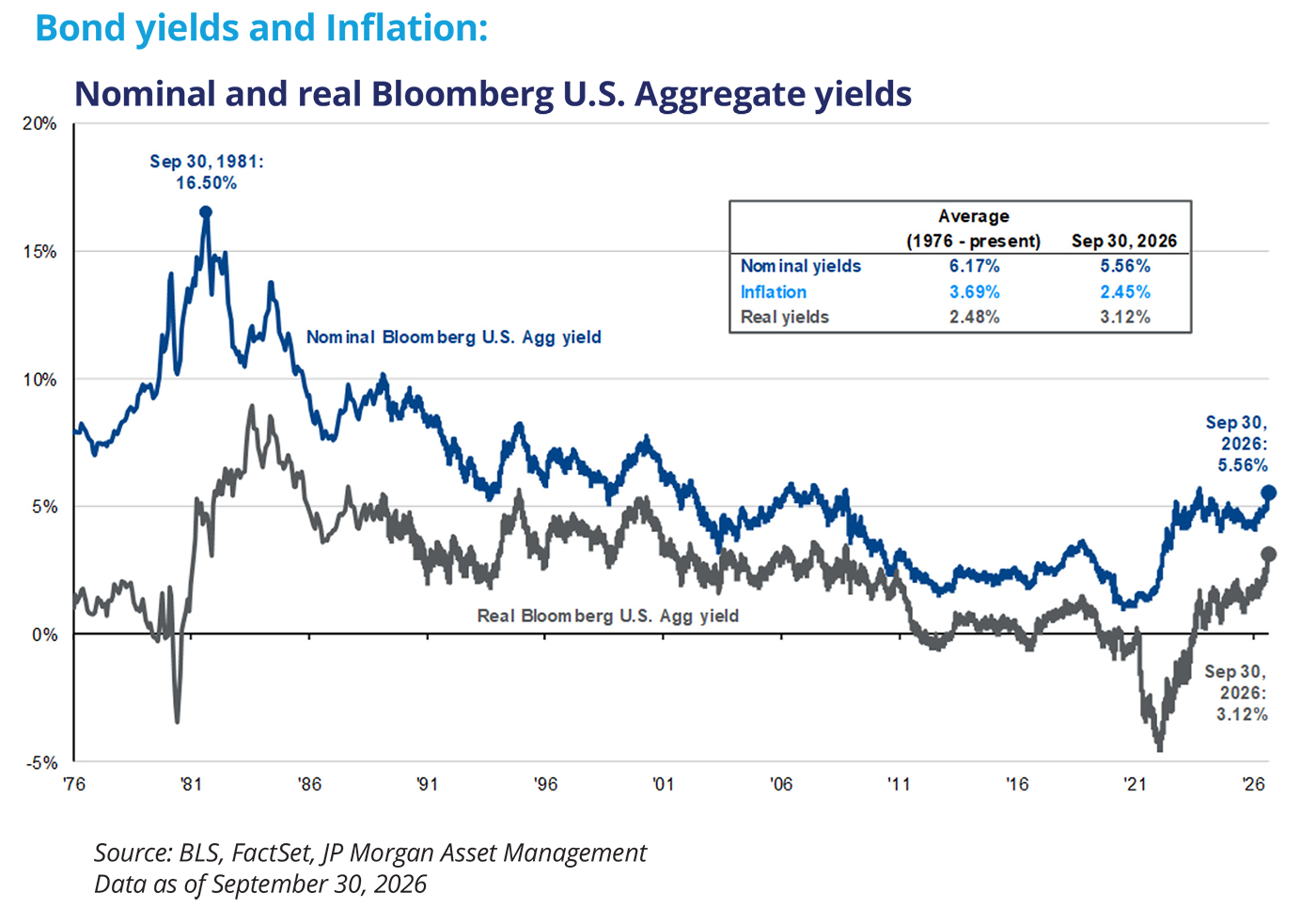
United States interest rates remain one of the most important variables influencing the global economy because of the size of the US economy and the dollar as the preferred reserve currency. US interest rate policy affects the cost of capital, consumer borrowing, corporate investment, government debt service, currency values, and asset prices. In a globalized financial system, changes in US interest-rate policy can also ripple through international markets by influencing the value of the dollar, capital flows, and financing conditions for economies around the world. The resulting direction and perceived stability of monetary policy often matter as much as the current level of rates, helping to shape investor confidence, valuation multiples, and the broader risk-taking environment.
For much of the past decade, fixed income investors have faced a difficult trade-off: Accept lower income or take greater risk in pursuit of higher returns. Today, that dynamic looks markedly different.
Higher interest rates have restored income as a meaningful driver of fixed income returns. Across many sectors, investors can now access yields that would have looked attractive even during periods of stronger economic growth and wider credit spreads. This shift has important implications for portfolio construction, particularly as volatility persists across markets.
What makes the current environment particularly notable is the breadth of opportunity. Investment-grade credit continues to benefit from healthy corporate fundamentals and strong demand. For high tax bracket investors, municipal bonds offer more compelling tax-equivalent income after a period of repricing. While private credit and emerging market debt continue to provide differentiated sources of yield and diversification, we currently haven’t found an opportunity in these investments.
None of this eliminates risk. Higher rates, energy prices, geopolitical uncertainty, and tighter spreads all require discipline. However the starting point for fixed income investors is fundamentally different than it was just a few years ago. A focus on durable income streams and selective opportunities across fixed income can help create a stronger foundation for diversified portfolios.
Conflicts in Ukraine and the Middle East continue to create uncertainty, markets have thus far focused primarily on their implications for energy prices and supply chains. To date, global energy markets have remained relatively resilient, helping to limit broader economic disruption. Nevertheless, geopolitical risks remain difficult to forecast and can affect market sentiment quickly. As a result, maintaining diversification across regions, sectors, and asset classes remains an important component of risk management.

History suggests that investment decisions driven primarily by election outcomes often prove less impactful than anticipated. Corporate earnings, economic growth, monetary policy, and valuation have historically been more significant drivers of long-term returns.
We continue to see value in broad based global equity exposure with specific opportunities in real estate, technology (researching Quantum related), and core fixed income.
Despite persistent concerns surrounding AI, geopolitics, inflation, trade policy, and the U.S. political situation, global equity markets continue to demonstrate resilience. While volatility and performance dispersion remain elevated, these conditions are not unusual and often create opportunities for disciplined investors. Our focus remains on maintaining diversified portfolios, managing unintended concentrations, and identifying high-quality businesses capable of creating long-term value regardless of the headline environment.

Planning into Year-End
As we move toward year-end, this is an important time to review financial and tax-planning opportunities before key deadlines pass. Thoughtful planning is most effective when investment, tax, charitable, and estate considerations are evaluated together rather than in isolation.
Tax-loss harvesting: Review taxable portfolios for opportunities to realize losses that may offset realized gains, while remaining mindful of portfolio objectives and applicable tax rules. The increase in fixed income yield has provided opportunities within the fixed income markets to monetize these losses as well.
Roth conversions: Evaluate whether converting a portion of a traditional retirement account to a Roth account may be appropriate based on current and expected future tax circumstances.
Charitable giving: Consider strategies such as donor-advised funds, gifts of appreciated securities, and the timing of charitable contributions to align philanthropic goals with broader tax planning.
Tax-minimization strategies: Coordinate estimated payments, capital gains, investment income, retirement distributions, and other planning items with tax and legal advisers to identify appropriate year-end actions.
Portfolio and liquidity review: Confirm that investment allocations, cash needs, concentrated positions, and planned distributions remain aligned with near-term priorities and long-term objectives.
Retirement Plan contributions: Consider maximum employer retirement plan (401K & etc.) contributions including catch up contributions and capitalizing on any plan matching benefits.
We encourage clients to contact us to schedule a year-end planning appointment. A coordinated review can help identify timely opportunities, avoid unintended tax consequences, and ensure that financial plans remain aligned with evolving goals.
Please call our office to schedule a year-end planning review.